Protest
Architecture
is a free online resource for those interested in studying protest architecture. It accompanies the new book Protest Architecture: Structures of Civil Resistance, by Nick Newman.



What is protest architecture?
Protest architecture describes the design and use of built structures to facilitate protest, civil rights and non violent direct action.
A typical aim of protest architecture is to leverage a protesters ability to occupy a given location, complicating efforts from state actors or private security to remove them.
Protest architecture can involve the use of existing built environment and surrounding landscape, or the creation of wholly new structures: from treehouses and tunnels protecting ancient forests, to bamboo structures blocking roads during urban occupations.
Protest architecture is often designed to interface directly with the human body, by suspending a protester in mid air, or providing ‘lock on’ points which they can attach themselves to. When occupied in such a way, protest architecture becomes complicated to dismantle, involving specialist trained crews and equipment.
Protest architecture can help to prolong a protest, provide shelter or lookout points, block vehicles and infrastructure and create iconic photographic imagery.
Forms of protest architecture
This section categorises twelve different forms in which protest architecture can manifest in the built environment, as documented in Protest Architecture: Structures of Civil Resistance. Following the book launch, this page will be updated with additional material and videos.
Alteration
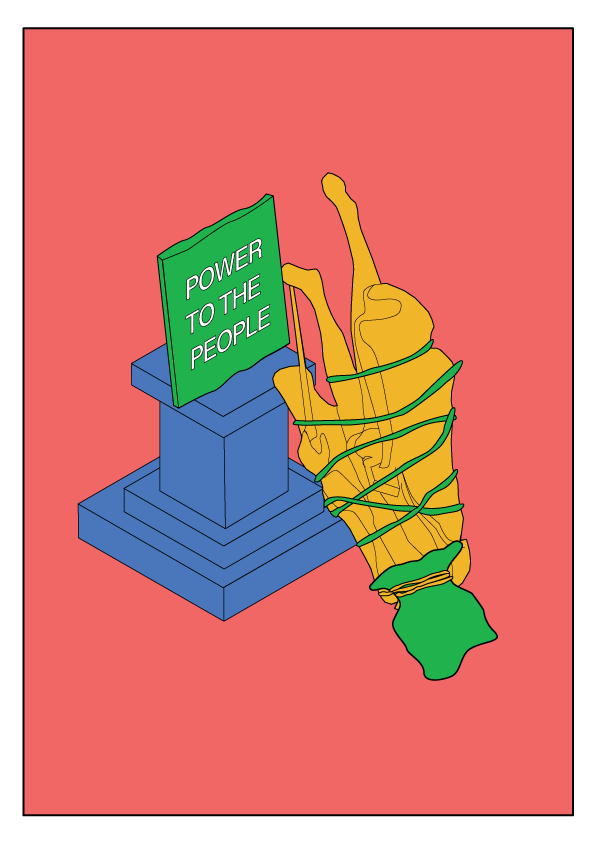
Just as landmark pieces of architecture can become a focus for protest, other parts of the built environment may also have a symbolic relevance to those pushing for societal change. Statues, sculpture and other historic artefacts, whilst not pieces of architecture in themselves, can form important constituent parts of a building or its wider setting. The elements with greater cultural significance may also attract the greater attention of protesters. If Reappropriation and Occupation are methods of interacting with the built environment, Alteration is the attempt to change its fundamental form or materiality.
Barricades
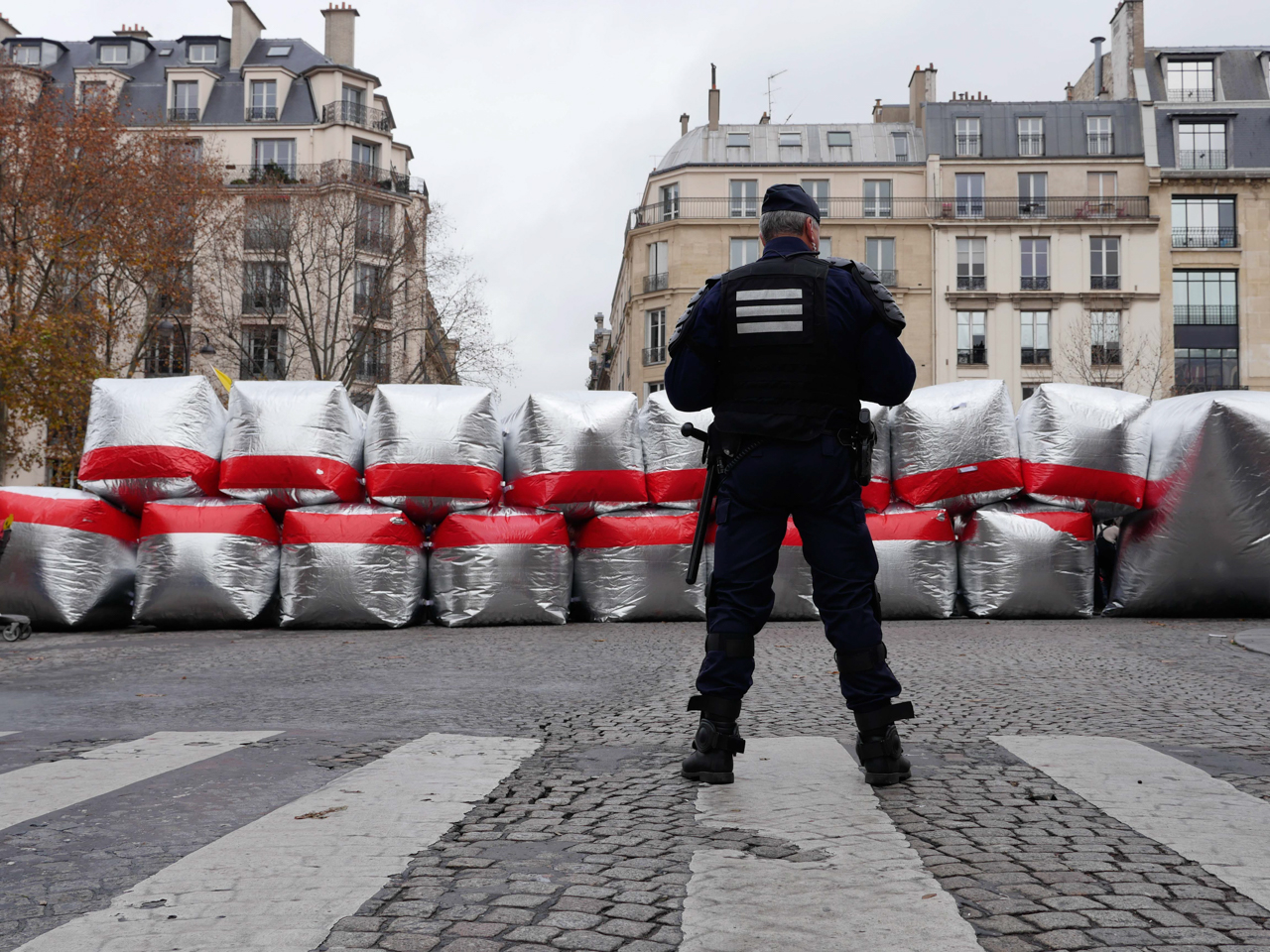
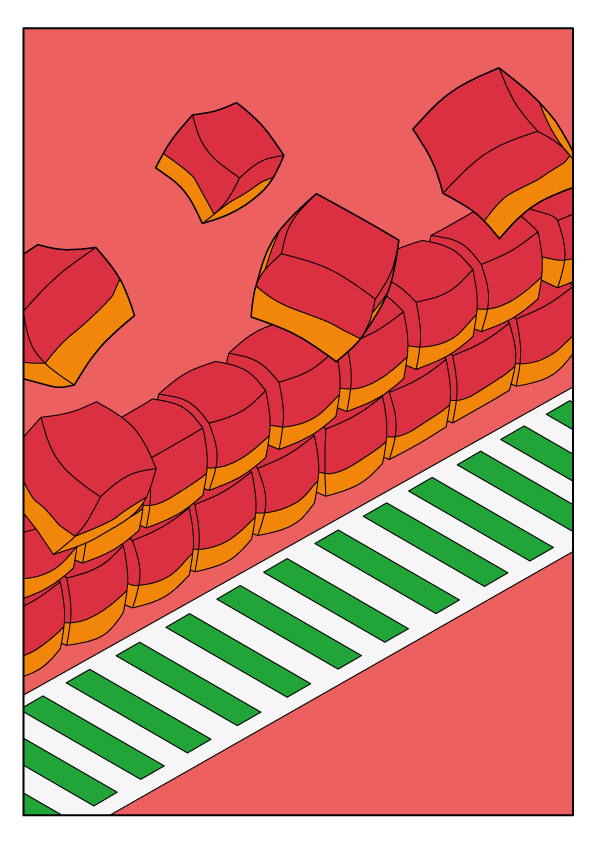
The barricade is one of the most evocative forms of protest structure, rich in history and charged with the spirit of insurrection. Its function is as a blockade, placed across a road or path to prevent access through it.
It is the speed of the construction and constituent components that distinguish the barricade from more permanent forms of barrier, such as a wall or embankment. Where a wall may be constructed in good time from homogenous materials such as brick or stone, a barricade is more likely to be assembled hastily from found materials: overturned cars, street furniture, timber, rubble and general detritus.
Beacons
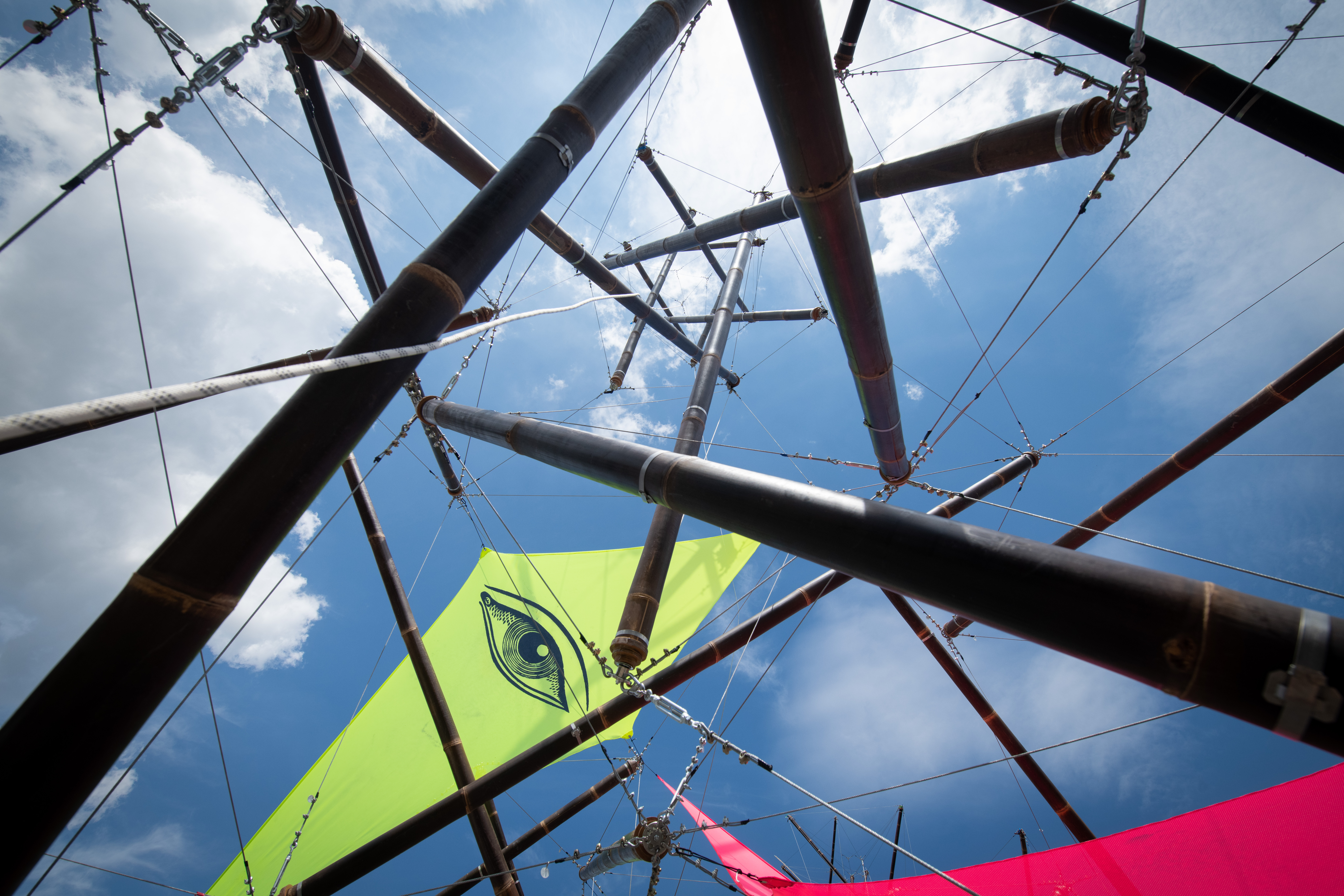
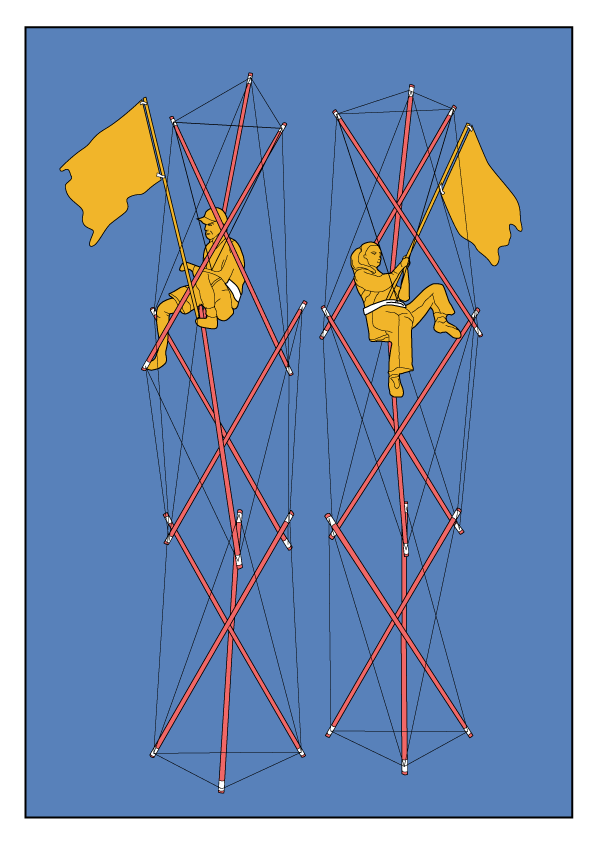
Protest Beacons, although a form of Tower are of sufficient complexity to warrant a discussion all
by themselves. They are created using
tensegrity principles, based on Kenneth Snelson’s Needle Tower.
Designed first in the UK developed by members of Extinction Rebellion (XR), their name derives from signaling beacons, forms of structure built in a visible location, such as a hilltop, in order to attract attention or to alert to an incoming threat. Protest Beacons continue that tradition in conveying a message of imminent danger, and are now used in protests worldwide.
Exhibitions
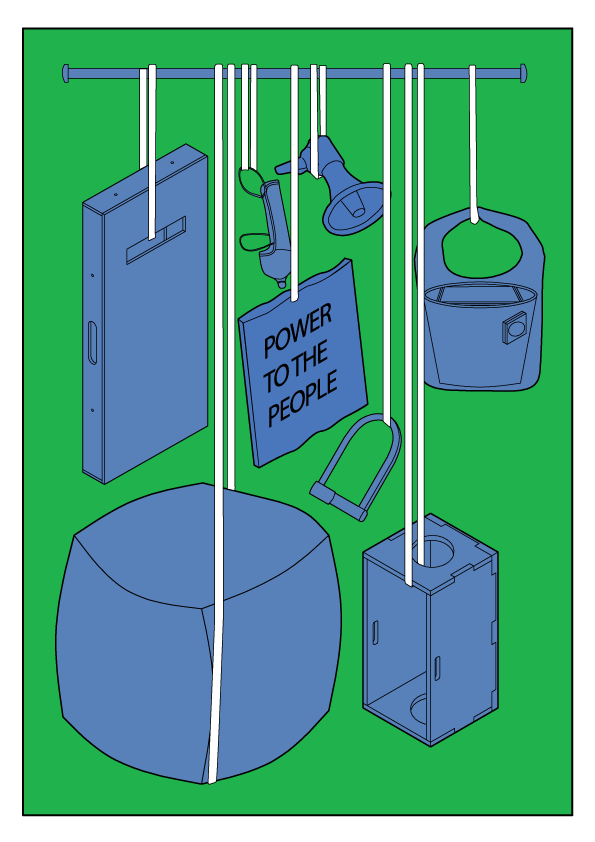
Many examples of protest architecture have been designed to push the boundaries of what is considered lawful. But there have been protests within the conventional practice of architecture, which were designed to be confrontational
in different ways.
Pavilions and exhibitions have produced playful, provocative and arresting pieces of protest architecture with a much lower, albeit still
possible, risk of police intervention.
Exhibitions also allow the general public to engage with the subject material and structures used in protest, which can in turn inspire future actions.
Festivals
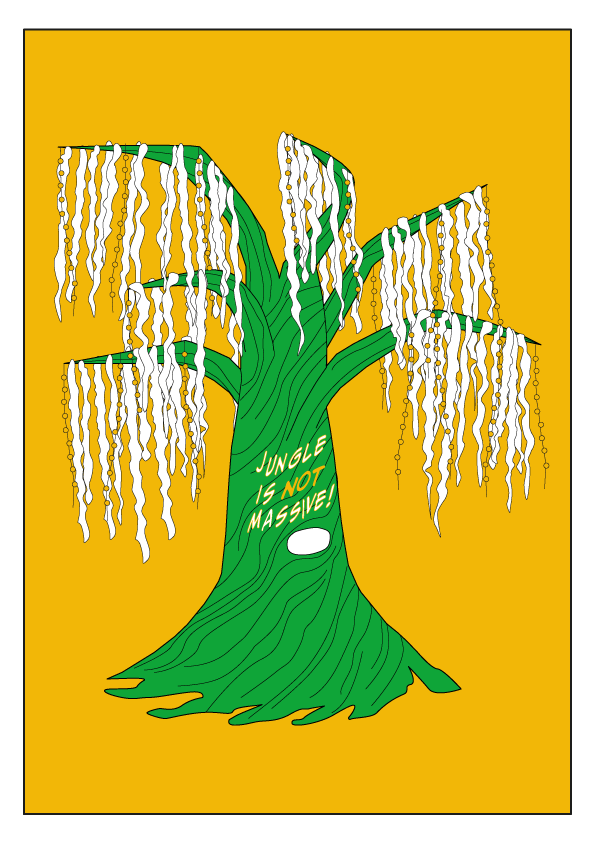
The occupation of space for festivals can be colourful and provocative, re-purposing the built environments, albeit temporarily. Taking over a space for partying can be an act of protest, especially when it is carried out by an underrepresented group.
What sets it apart from other forms of Occupation is its propensity to use celebration, music and other forms of creative expression in its delivery.
Protest groups such as Extinction Rebellion, with their festival like rebellions, have built upon events like Pride and Carnival by adding new protests structures to block traffic and create infrastructure.
Occupation
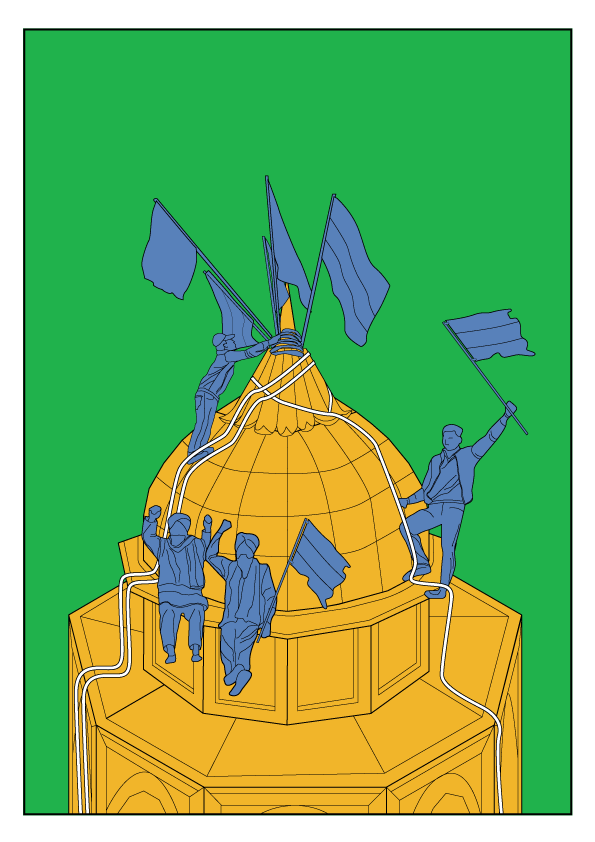
Buildings and urban landscapes have inherent associations with people coming together. It is a human instinct to assemble in number, whether in times of peace – for trade and commerce, leisure, culture and civic duties – or in times of difficulty – for protection, information, discussion, conflict and resolution.
Civic buildings and the open spaces they inhabit are a natural focus for such gatherings. The are (often intentionally) emblematic of the society that created them. To gather in protest outside buildings of civic importance is therefore to challenge or address the power vested in the representatives that occupy them.

Reappropriation
Just as building retrofit provides a cost-carbon effective way of providing additional accommodation or improved thermal performance, the reappropriation of buildings as a platform for protest can be equally effective.
For many iconic buildings, the simplest form of reappropriation may be to use them as a backdrop, perhaps for a banner or a protester suspended at height. The juxtaposition creates an immediate narrative, framing the layered composition of architecture and occupier. In such a
way, the symbolism inherent in a landmark building or monument can be subverted.

Student proposals
The architectural education system presents prospective students with perhaps one of the most radical opportunities of expression that they may encounter within their career.
Liberated – however temporarily – from the immediacy of earning an income, students may devote a far greater proportion of their creativity towards abstract thought and expression.
Protest architecture talks through a number of different examples of student work that directly relates to protest.
Towers
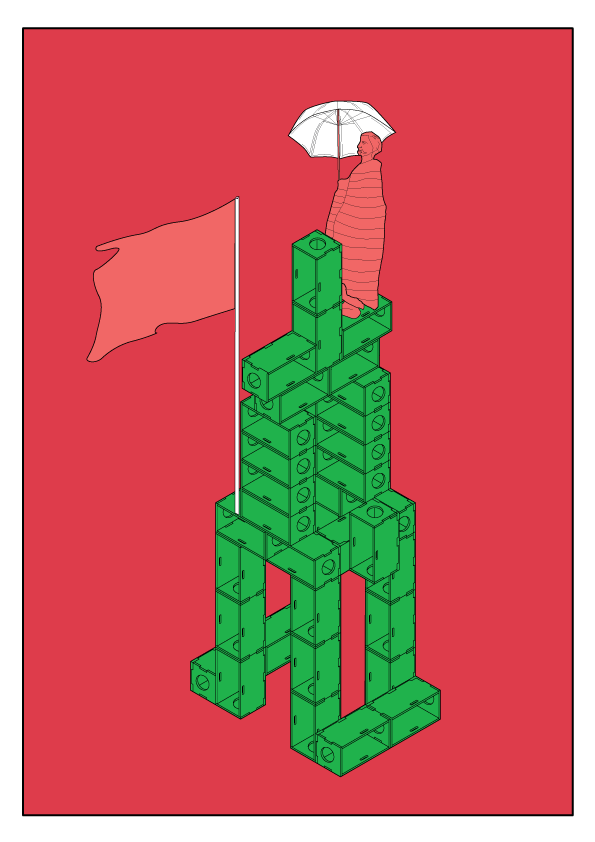
The tower is an iconic form with many precedents in form and symbolism. Towers are often associated with strength and isolation, and have been created throughout history for defence, observation, communication and storage. Their height evidences the power of those with the resources to construct them, and their proportions elevate the imagination of those who look up at them.
A traditional tower is tall and narrow in proportion, with a single room and/or staircase making up the plan, leading to an enclosed room or platform at the top. Although seldom used defensively in contemporary architecture, the use of towers for protest provides perhaps one of the strongest conceptual links with their historic precedents.

Treehouses
Humans have a strange relationship with trees. On the one hand, trees are loved, revered and treasured, providing humanity with food, clean air and temperate environments. But humans are also violent toward trees, destroying them to create fuel or building materials, or because they happen to be in the way.
Much of the built environment is made using, heated with or built upon the site of trees, and so architects are often part of the group of humans implicated directly or indirectly with their destruction. But there are also designers who use their skills in defence of trees, and many examples are featured in the book.

Tripods
Tripods are one of the simplest and most powerful demonstration of protest architecture’s ability to hold space with limited resources. They require only
three poles connected atone end, such that, when
erected, a protester can sit atop them above head
level. Protesters on tripods cannot be easily removed by a police officer without causing a risk of injury to either party.
Tripods are often made from round poles such as timber or bamboo lashed with rope, or metal scaffolding with proprietary connectors. In the former, rope acts as a natural fulcrum, locking the poles into place as they are spread, and preventing them spreading apart
Tunnels
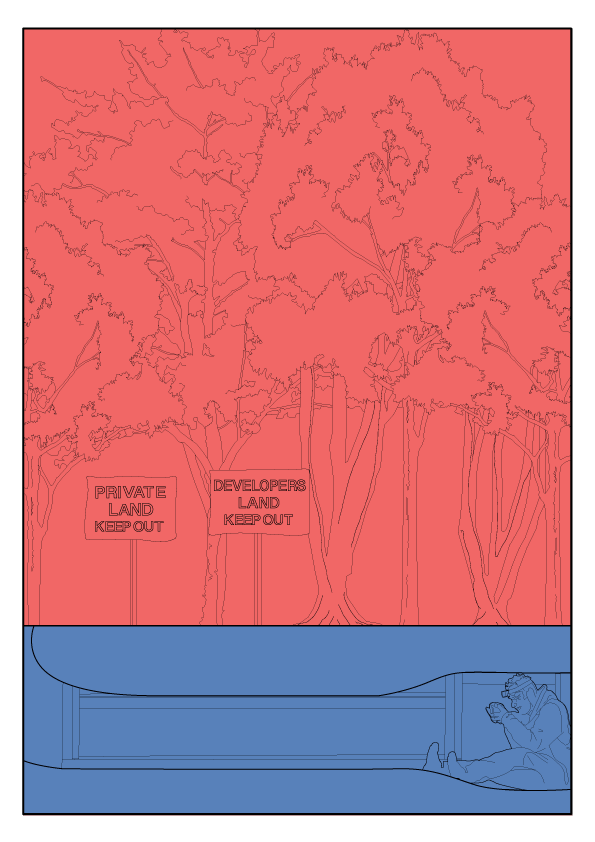
Tunnels are an inventive and subversive
form of protest architecture that have
created complex underground structures
with little more than a spade, a pickaxe
and a good measure of bravery.
Instead of creating visible Barricades above ground to hold space, tunnelling uses negative space to protect the landscape above it. Protesters entrenched in underground labyrinths have
prevented heavy machinery from operating above, as the tunnels created may be vulnerable to collapse. For that same reason, tunnelling can be a dangerous and complicated way of creating
an occupied space.

Reviews / Responses
Reuben J Brown, Architectural Review, provides a critique of the book alongside a preview of an exhibition featuring protest architecture at MAK, Vienna. It starts by describing some of the detailed and carefully implemented pieces in the MAK exhibition, including an intricate recreation of a treehouse used by activists in the Hambach forest, Germany. It goes on to note that
“…perhaps a more practical viewpoint is required; in [Protest Architecture: Structures of Civil Resistance] we are offered one…through his practical, activist experience, Newman is well attuned to the unique economic and media influences that distinguish protest architecture from other forms of temporary structure, and his book provides a useful overview of its typologies as well as the safety, logistical and legal concerns of the potential protest architect.” Reuben J Brown, Architectural Review”
The review is also critical of the definition of Protest Architecture discussed in the book.
‘In a puzzling move, Newman excludes from his definition of protest architecture any protest that is not “for the greater good”
This is a fair argument, in that this definition opens up a debate on what constitutes ‘the greater good’ and of whom should be it’s arbiter.
In response, the intention behind this definition was as a form of safety break for those considering the use of protest architecture, in order that the protest architect should not aim to harm others in its creation. As an example, architecture created in the name of fascism, would not be considered protest architecture within the scope of this book. Much like the ‘Architects Code‘, the requirement for protest architects to consider the wider impact of their work is an important aspect of the creation of protest architecture.
It is therefore the motivation of the designer, rather than the perceived outcome that is perhaps the most critical here. It it is not always possible to know in advance whether or not an architectural intervention will be received as it was it intended, and some well meaning actions can and have had disastrous consequences (such as the XR’s tube protests in 2019). Whilst it was not the intention to exclude valid forms of protest architecture from the canon, simply as a result of unintended consequences, it was the intention for architects to consider their motivations before engaging in protest architecture.
About
Protest Architecture accompanies the book Protest Architecture: Structures of Civil Resistance, by Nick Newman, available from RIBA Books and will be updated periodically with additional information and material on the different forms of protest architecture following the book launch.
Author
Nick Newman is a Director of Studio Bark and U-Build. His experience spans environmental architecture, climate activism, building performance evaluation and deep energy retrofits. Nick is a Passivhaus Designer and has contributed to a number of journals and publications, including Everything Needs to Change (RIBA Publishing, 2021), Environmental Design Pocketbook (RIBA Publishing, 2015) and the Passivhaus Designer’s Manual (Routledge, 2015). He was named a ‘Rising Sustainability Star’ by Building magazine in 2014 and contributed to Studio Bark winning the Archiboo Activism Award in 2024. Nick is an advocate for radical responses to the Climate Emergency, and was arrested in October 2019, December 2019, and September 2020 for his involvement in the Extinction Rebellion protests, which brought Central London to a standstill.
Contact
If you have any comments about the book / website or would like to contribute examples of protest architecture, feel free to get in touch using the form below.
Your message has been sent

 Protest Architecture